History
Each Welsh Quilt has its own history. Sometimes this is hidden: we don't know the person who made the quilt spread out in front of us.
But the evidence has grown over the past 30 years of just how important Quilt making was to Wales. Beautiful objects have come from the need to keep warm and to create an inheritance for the "bottom drawer". As the centuries went on, the quilts also became a record of changing textiles.
The influence of Welsh quilts is now generally recognised as being of world-wide significance. It's this history that we wanted to make available at the Welsh Quilt Centre.
-
17th and 18th Century
 During the seventeenth and eighteenth centuries the quilted bedcovers that existed were nearly all utilitarian, of heavy worsted material or woollen fabric encasing an old woollen blanket.
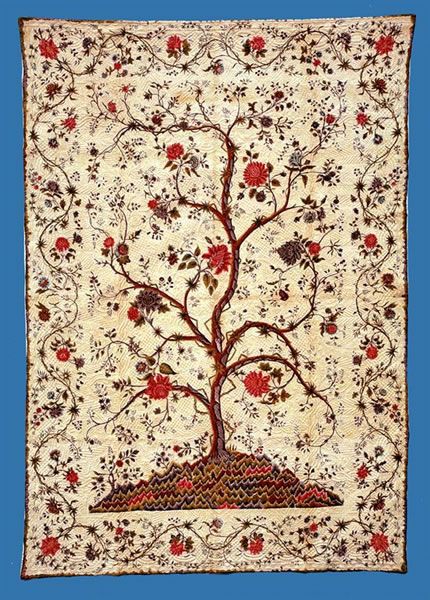
When decorative quilts appeared at the end of the eighteenth and the early nineteenth centuries they were the province of the wealthy. These quilts were mainly patchworks utilising expensive imported fabrics, such as chintz, silks, velvet and ribbons.
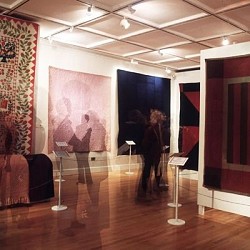
This exceptionally large “Tree of Life” quilt came from a gentry house in the Gwaun Valley, Pembrokeshire and was made in 1810.
-
Mid 19th Century Quilts
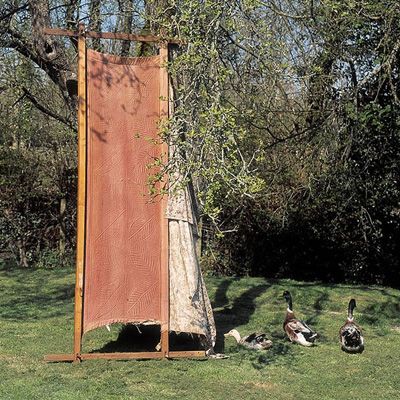 By the mid nineteenth century, quilting had become a cottage industry. Most quilts were made by paid professionals such as miners’ widows or village seamstresses. Some were itinerants who boarded at a farm and stayed for the two weeks or so it took to complete a quilt.
The fabric and filling were always supplied by the farmer’s wife but the quilting pattern was chosen by the quilter
-
Late 19th and early 20th Century
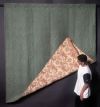
 From about 1890 to 1940 satin-cotton was the dominant fabric being used for quilts. These were often wholecloth quilts with one side in a plain colour and the reverse patterned or floral.
 -
20th Century Quilting
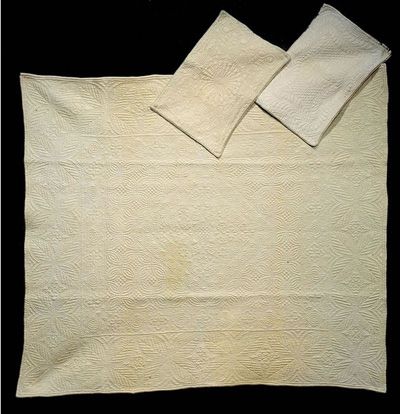 By the twentieth century quilt making was uneconomical.
Between the Wars there was a resurgence partly due to the Rural Industries Bureau which was started in 1928 in order to stimulate craft industries in Wales during the Depression. The finished product was often sold in commercial galleries to smart hotels, the upper classes and even to Royalty.
Regrettably, this enterprise was halted by the Second World War and post-war attempts to stimulate another revival failed.